3-Phase vs Single-Phase Generators Explained
If you've been asked whether you need single-phase or three-phase, here's the plain-English version, without the electrical lecture.
Single-phase
This is normal household and small-business power, the standard 10A and 15A plugs you know. Lights, coffee machines, tills, tools, most event and home gear all run single-phase. Our Honda inverters (2.2 to 7 kVA) are single-phase.
Three-phase
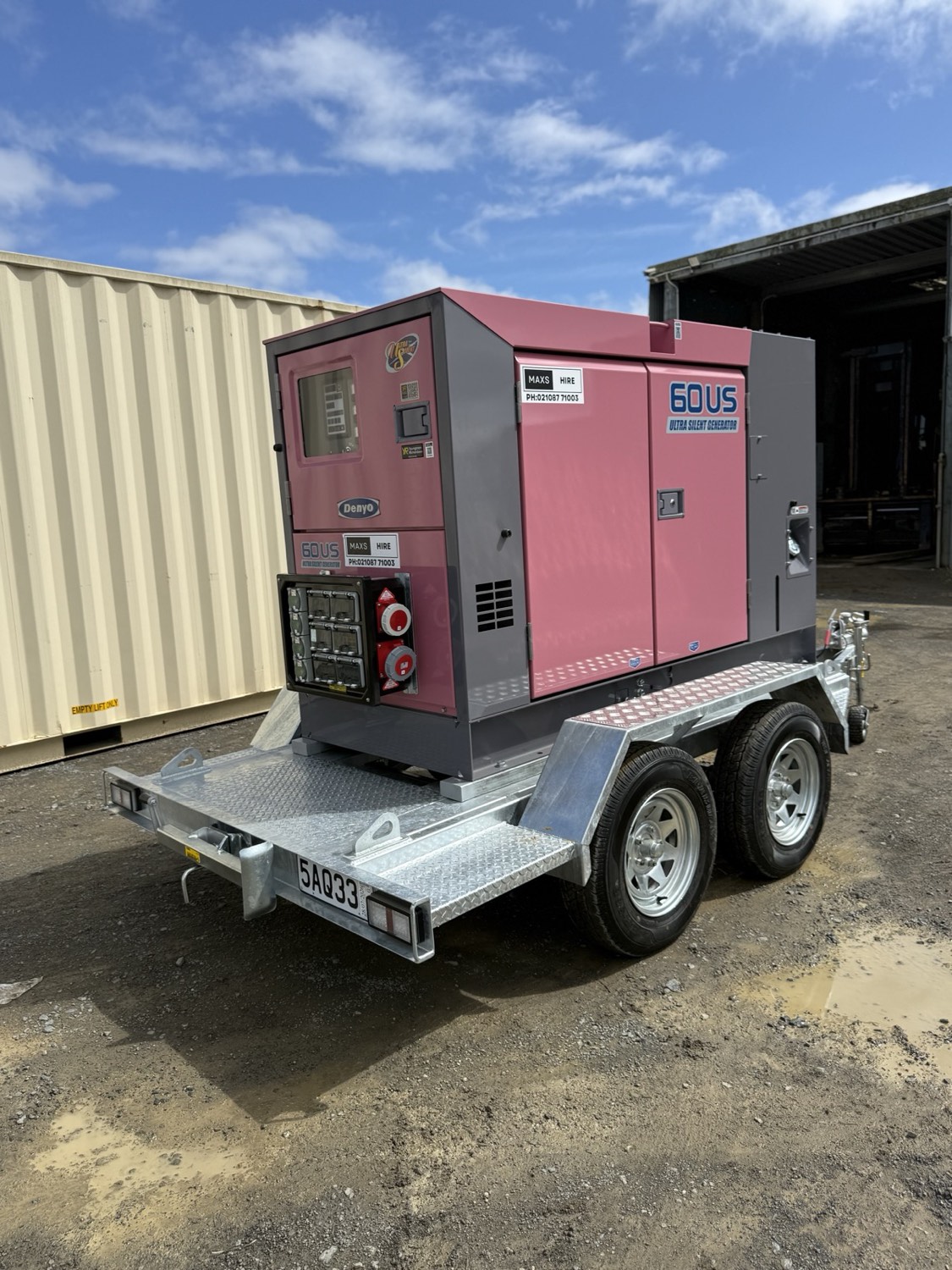
Bigger, heavier equipment, industrial motors, large HVAC, some commercial kitchen and construction gear, needs three-phase power (usually 415V). It delivers more power more smoothly for heavy loads. Our Denyo 60 kVA provides both three-phase and single-phase.
How do I know which I need?
- Check the plug and the equipment plate. Three-phase plugs are larger with four or five pins (like a 32A or 63A lead).
- If it's normal household plugs, you're single-phase.
- Still unsure? Send us a photo of the plug or the equipment label and we'll tell you.
Big three-phase jobs
The 60 kVA covers most three-phase work in-house. For larger loads we arrange ultra-silent sets from 120 to 300 kVA through our network.
FAQs
Do I need single-phase or three-phase?
Most homes, events and small businesses only need single-phase. Three-phase is for heavy industrial and commercial equipment. Check the plug, or send us a photo and we'll confirm.
Can one generator do both?
Yes. Our 60 kVA Denyo provides three-phase and single-phase outlets at once, so you can run mixed loads off one machine.
Need power sorted?
Tell us the job, we'll recommend the right unit and get you a price fast.